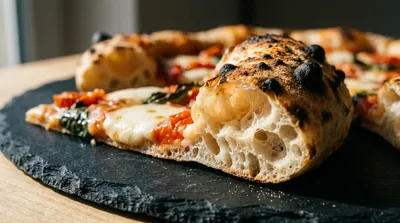
The Anatomy of a Perfect Crust
A true artisan crust is defined by contrast. You want a shatter-crisp exterior that gives way to a soft, chewy "crumb" interior. This duality is achieved through the development of a strong gluten network, which traps carbon dioxide during fermentation and expands violently when it hits the heat.
The hallmark of a professional bake is "leopard spotting." These are the small, charred bubbles that dot the surface of the crust. They aren't burnt; they are the result of rapid caramelization and blistering that occurs only when the dough is hydrated correctly and exposed to extreme temperatures.
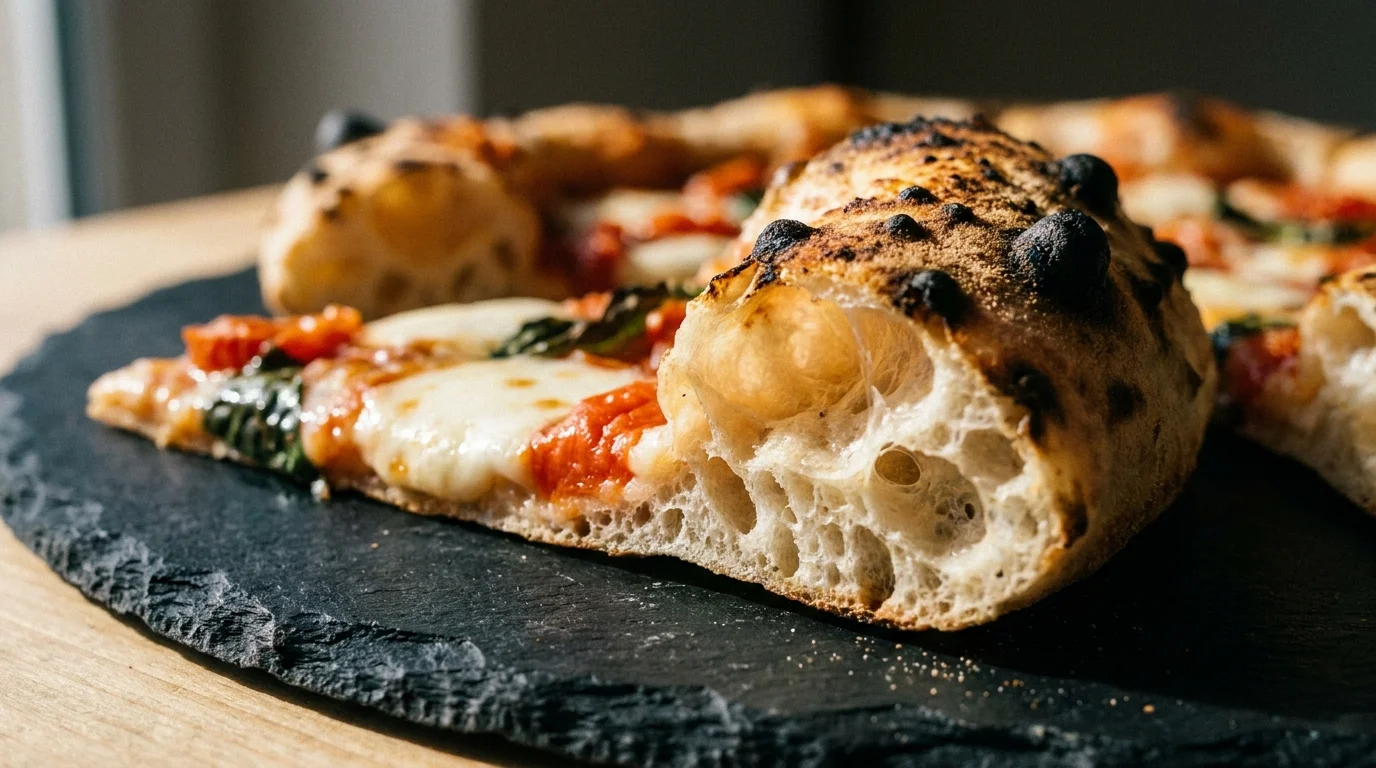
This rapid expansion is known as "oven spring." In the first few minutes of baking, the heat causes the gases trapped in the dough to expand quickly before the crust sets. If your oven isn't hot enough, the gas escapes slowly, leaving you with a flat, dense bread rather than an airy, bubbly rim.
Flour Wars: 00 vs. Bread Flour
The flour you choose determines the texture and how the dough reacts to your specific heat source. Tipo 00 is the gold standard for Neapolitan pizza. It is milled to an extremely fine powder, giving the dough a softer feel and making it highly resistant to burning at the intense temperatures of a wood-fired oven.
However, 00 flour can be disappointing in a home oven. Because it is designed for 900°F heat, it may remain pale and soft when baked at standard home temperatures. For those using a conventional oven, high-protein bread flour is often the better choice. With a protein content typically between 12% and 13%, it develops a sturdier gluten structure that provides a satisfying chew.
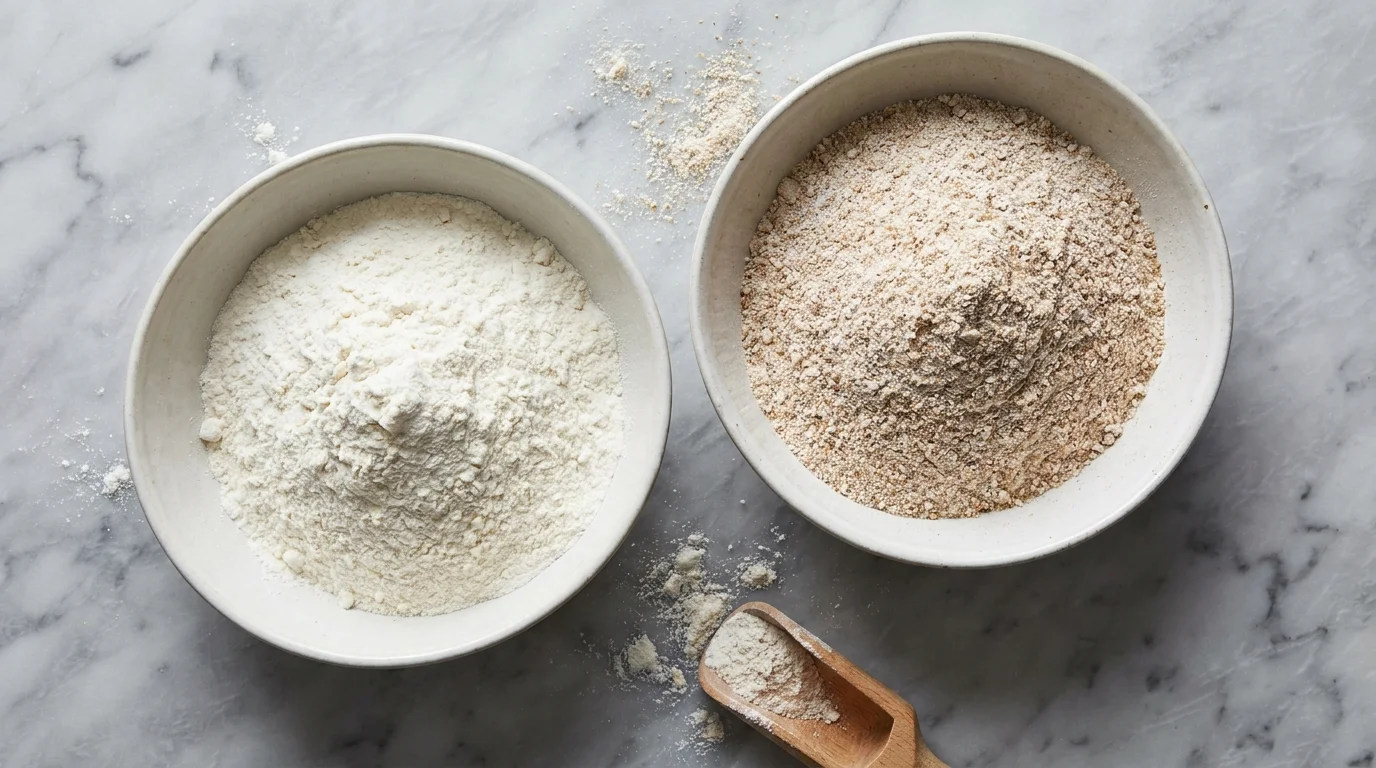
Bread flour handles the lower heat of a 500°F oven more effectively, producing a golden-brown crust that holds its shape under the weight of toppings. If you are chasing that specific Neapolitan softness and have a professional oven, go with 00. For everything else, bread flour is the practical winner.
The Magic Number: Understanding Hydration
Hydration is simply the ratio of water to flour by weight. It is the single most important variable for controlling the "openness" of your crust. Low hydration dough, around 60%, is easy to handle, doesn't stick to your fingers, and produces a denser, more uniform crust. It is the safest bet for beginners.
High hydration dough, 70% and above, is a different beast. It is sticky, often frustrating to work with, and requires specific handling techniques. The reward, however, is a lighter texture with much larger air bubbles and a crispier finish. The extra water turns to steam in the oven, pushing the dough upward and outward.
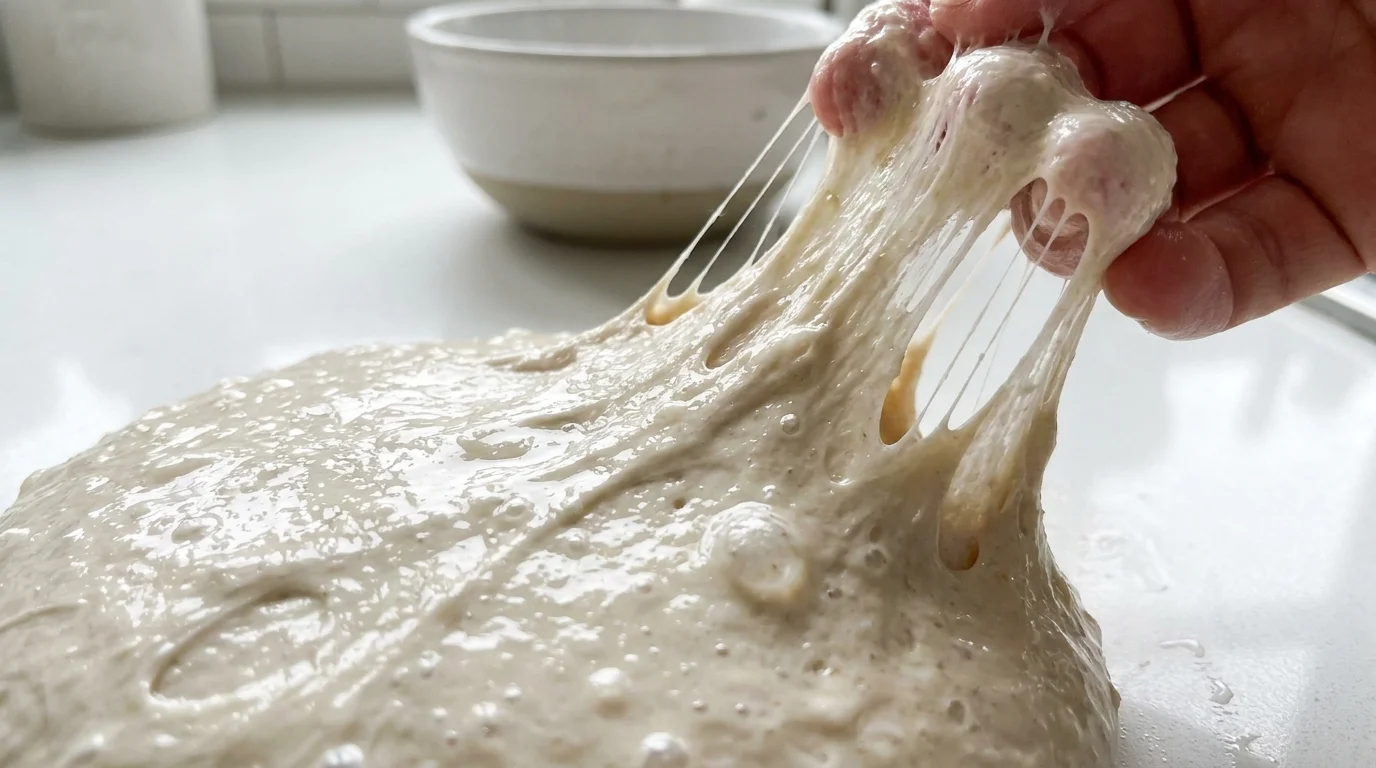
To get started with a high-hydration artisan dough, use this basic formula:
- Flour: 500g
- Water: 350g (70% hydration)
- Salt: 10g
- Instant Yeast: 3g
Patience is Flavor: The Cold Ferment
If you make dough and bake it two hours later, it will taste like plain bread. For a complex, tangy, artisan flavor, a cold ferment in the refrigerator for 24 to 72 hours is non-negotiable. This process slows down the yeast, preventing the dough from over-proofing while allowing other biological processes to take over.
During this cold sleep, enzymes in the flour break down complex starches into simple sugars. This does two things: it creates a much deeper, more nuanced flavor profile and provides more fuel for the yeast to create bubbles during the final bake. This is why cold-fermented crusts brown more beautifully than those made quickly.
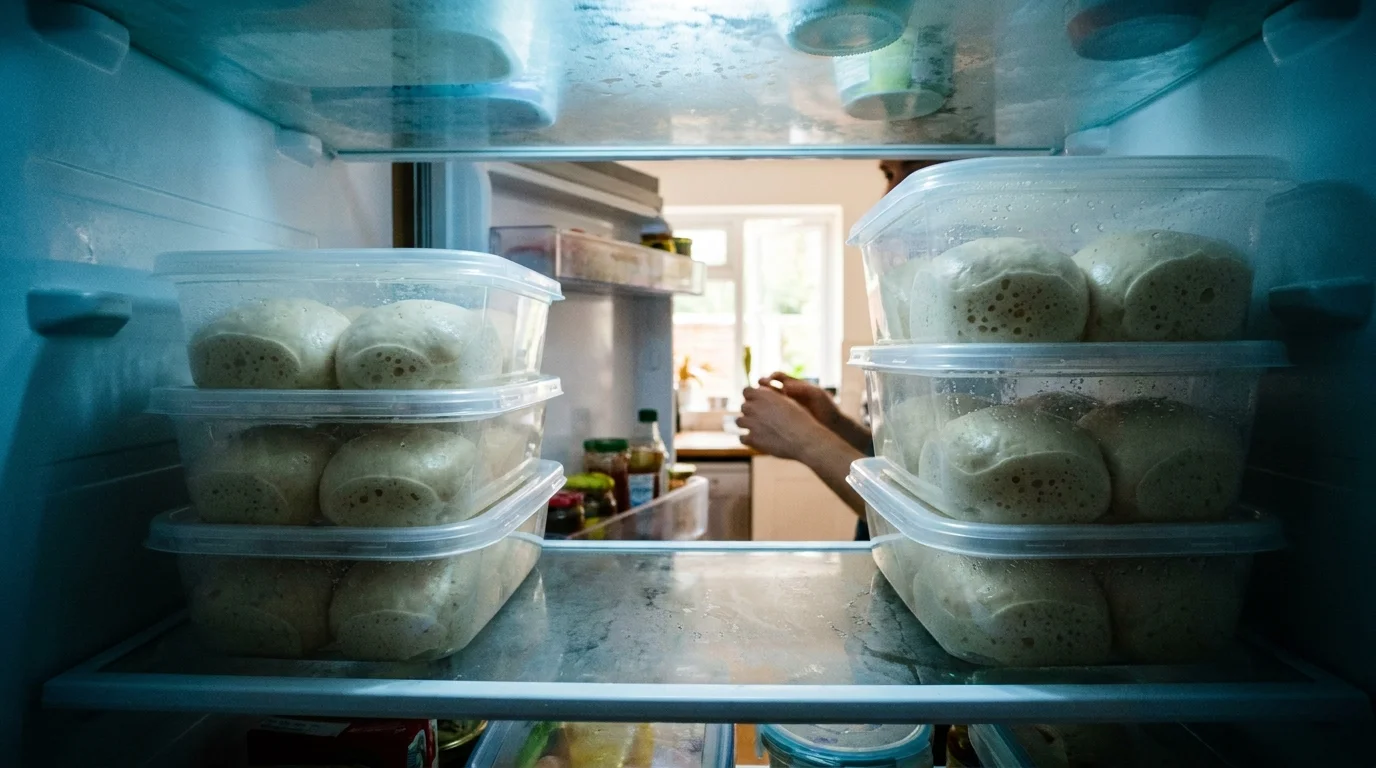
Beyond flavor, the cold ferment makes the dough more digestible. The long breakdown of gluten and starches reduces the "bloated" feeling often associated with fast-rise commercial pizzas. It also makes the dough slightly easier to stretch, as the gluten relaxes over several days.
Kneading and Shaping Without a Machine
You do not need a stand mixer to build a professional gluten structure. In fact, for high-hydration doughs, a machine can often overwork the flour. Instead, use the "stretch and fold" technique. Every 30 minutes during the first two hours of bulk fermentation, wet your hands and gently pull the edge of the dough upward and fold it over itself.
This method builds strength incrementally. By the fourth set of folds, you will notice the dough transforming from a shaggy mass into a smooth, elastic ball that holds its shape. It allows you to monitor the dough's tension without degassing it.
When it comes time to divide the dough into individual portions, be gentle. To shape a boule, cup your hands around the dough and tension the surface by pulling it toward you on a floured counter. Do not press down or punch the dough; your goal is to preserve the precious carbon dioxide bubbles created during the ferment.
The Heat Equation: Steel, Stone, and Cast Iron
Your oven is the engine, but the surface is the transmission. A standard baking sheet is useless for artisan pizza because it cannot hold enough thermal mass. You need a conductor that can transfer heat instantly into the bottom of the dough to trigger that critical oven spring.
A pizza steel is the gold standard for home use. Because steel conducts heat faster than stone, it provides the best bottom char and the fastest rise. A pizza stone is the traditional choice; it holds a lot of heat but takes much longer to recover its temperature between pizzas. If you have neither, a cast-iron skillet is a viable, accessible alternative for small, thick-crust pizzas.
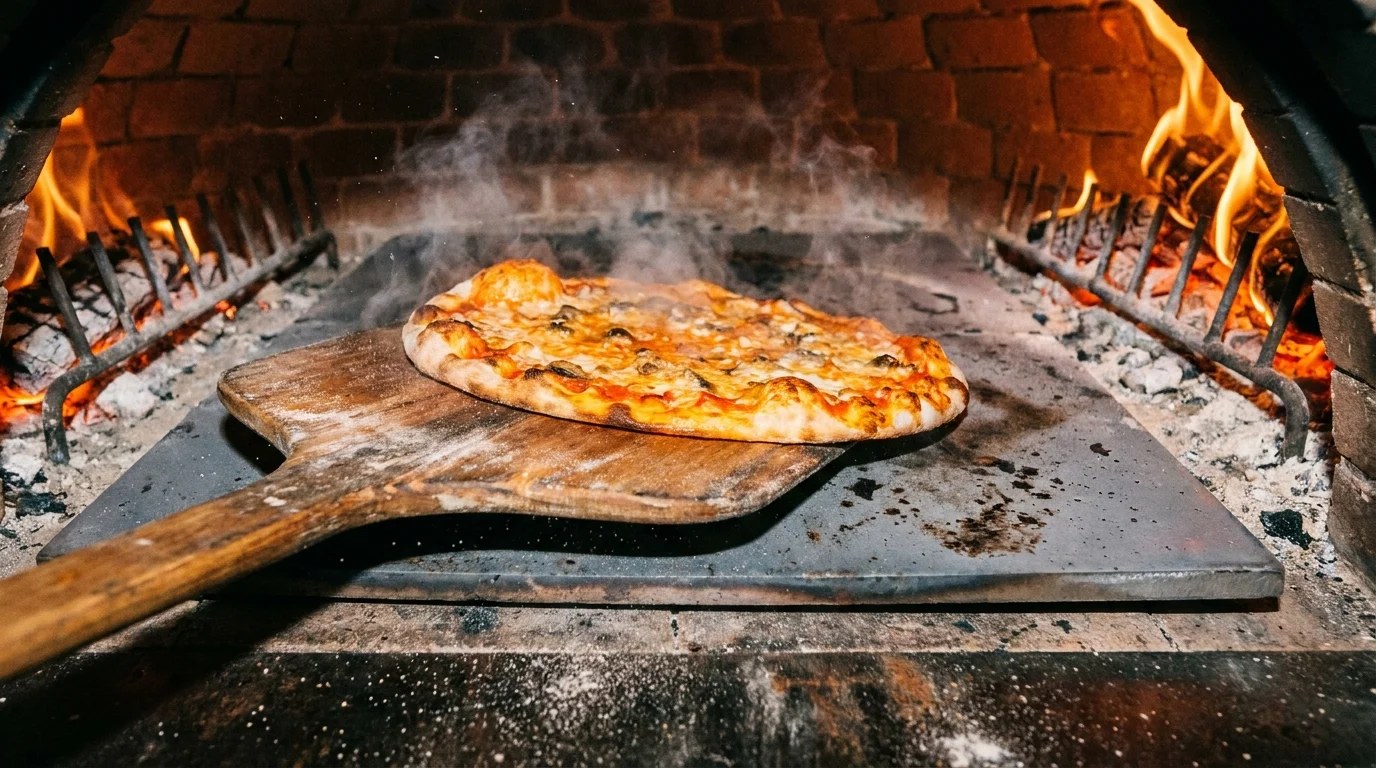
Regardless of the tool, the secret is the preheat. You must let your steel or stone soak in the heat for at least 45 to 60 minutes at your oven's maximum setting. Even if the oven thermometer says it is ready, the core of the stone or steel often needs more time to reach the temperature required for a professional blister.
The Stretch: No Rolling Pins Allowed
Using a rolling pin is the fastest way to ruin an artisan pizza. A rolling pin physically crushes the air bubbles you spent days cultivating during the cold ferment, resulting in a flat, cracker-like crust. To keep the air, you must stretch the dough by hand.
The "knuckle stretch" is the most reliable method. Place the dough ball on a floured surface and press from the center outward using your fingertips. Leave about an inch of the outer edge untouched; this creates the cornicione, or the raised rim.
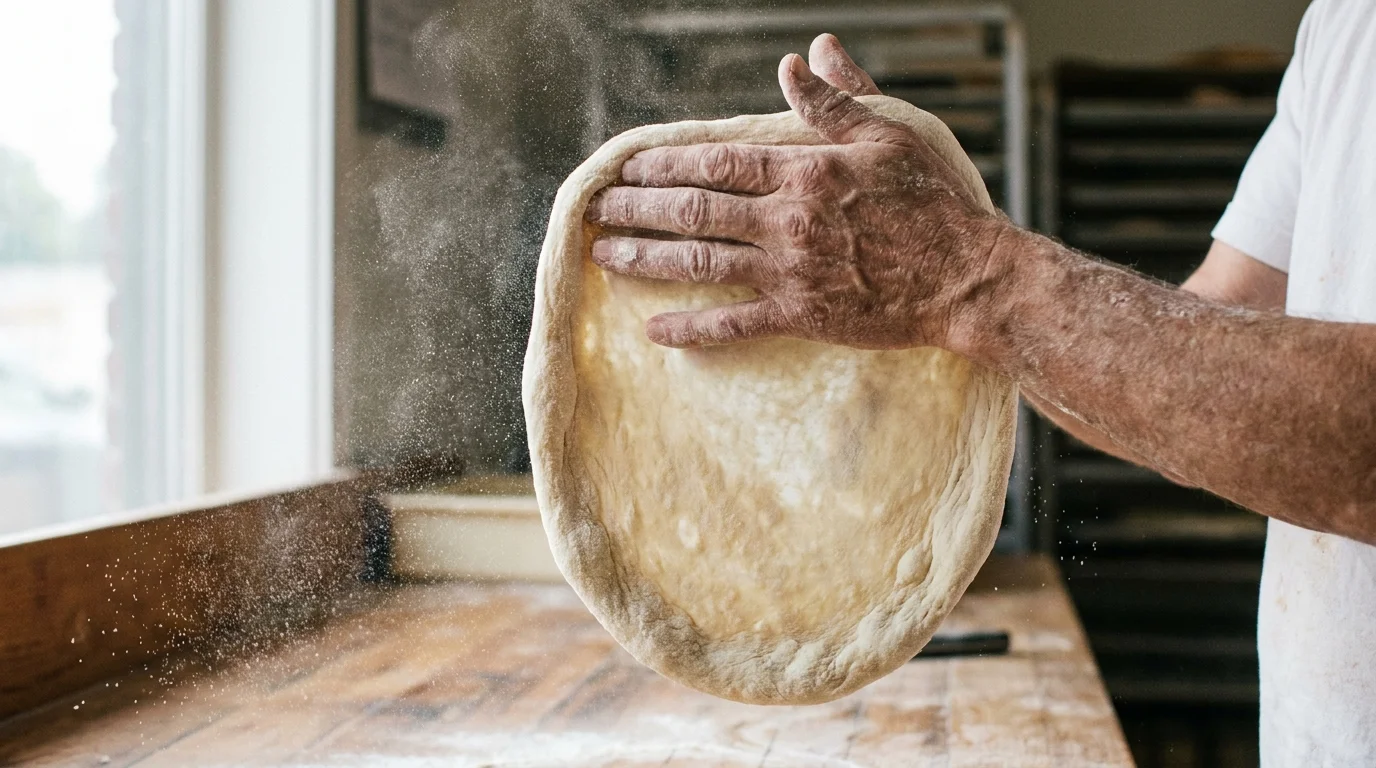
Once the center is thin, pick up the dough and gently drape it over your knuckles, rotating the dough as you go. Let gravity do most of the work. If the dough shrinks back, it is too tense—let it rest for five minutes to relax the gluten, then try again.
Troubleshooting Your Crust
If your dough refuses to rise, check your yeast and your salt. Dead yeast is common in old packets, but more often, the issue is that salt was poured directly onto the yeast, which can kill the organisms. Always mix your flour and yeast first, or keep them on opposite sides of the bowl.
A soggy bottom usually stems from one of two issues: an underheated baking surface or "topping overload." If you pile on too many wet vegetables or too much sauce, the steam gets trapped between the dough and the steel, preventing the crust from crisping. Less is more when it comes to toppings.
Finally, if your crust feels tough or "bready" rather than airy, you may be over-kneading or using too little water. Low-hydration doughs are naturally tougher. If you want that light, cloud-like texture, push your hydration toward 70% and trust the cold ferment to handle the structure.
Tags
Get Delicious Recipes Weekly
Join 25,000+ home cooks getting our best recipes straight to their inbox.
Free forever • No spam • Unsubscribe anytime